Currently, I'm working on a development project that's moving at breakneck speed. It's a serious learning experience for me. Specifically, working on revisions and taking huge notes with only a day or two max to apply them. My present mindset is that it's going to be a failure, but I think that's a standard writer's response when they're way out of their comfort zone. We can't really know how your work will come across when you've just barely emerged from writing it. The important lesson I've learned is that there is true value to taking long breaths between drafts. One day to absorb the notes, and to forget what you wrote -- let the optic residue of it burn away. Then another day to review the notes from a thousand feet up, rather than think about them practically. Another day still to start mapping out your true blue prints for changes, maybe discuss them. Finally, the time needed to apply them meticulously. When you have a third that time, for me at least, I lose the value of a bird's eye view and end up repeating some of the same mistakes in different ways. But as I said, we'll just have to wait and see what happens with the last draft.
TV Influences (2018)
As I did with the authors I'm reading now, I just wanted to throw down some current TV having an impact on me so I can look back on this later:
Atlanta - FX
Castlerock - Hulu
The Expanse - SyFy --> Amazon
The Punisher - Netflix
The Terror - AMC (already waiting for the right moment to re-watch this superb creation)
Shows I'm waffling on: Lodge 49 (AMC), Succession (HBO), Snowfall (FX)
Schedule
This is one of those days where I have nothing I'd really like to write about -- probably, I've burned myself out working on a couple projects since early morning (and more to come after) so I have nothing real to contribute here.
So, I've just decided to post a photo of my messy, antiquated, odd schedule book... you know, for posterity's sake?

Just a day in the life.
A Prayer Before Dawn

Just saw this film, based on the true story of Billy Moore -- an English man who was jailed in prison in Thailand and became a successful Muay Thai boxer for the prison's team.
It's a powerful, disturbing, and visceral film that is intensely focused on bodies. Controlling one's body through violence, or losing control to addiction. It's also about healing, how we can put the power of our bodies towards healing ourselves and others. There's as many close ups of violence (against the self, and others) as there are of bodies healing (the athletes massaging each other, other forms of intimacy, and an amazing scene of someone getting tattooed).
This is all to say, there's almost no dialogue. And much of the dialogue we hear is in untranslated Thai. As a writer, it was fascinating to watch. Trying to ascertain how much of the story and what ended up on screen to the actual screenwriters. My initial take is that they carefully calibrated a sort of montage, blurred narrative, of scenes that make up the film - in which Billy's internal state of mind is rarely clear, but his physical actions define who he is. When he commits violence for drugs, violence to protect a friend or himself, when violence drives him to take drugs, etc. It'd be a brilliant and difficult writing exercise: tell the full story of a protagonist with no dialogue, with no internal translation of their state of mind on the page - how attached can we get? Turns out, potentially, it can be very affecting - and very brutal. Of course it's heavily director-dependent, but the way Sauvaire utilized close ups in combat, established a jarring rhythm with the sound dynamics (when things are muted vs. blaring, music vs. quiet) -- it all adds up to an incredibly intimate and involving experience. If you have the stomach for it, I highly recommend!

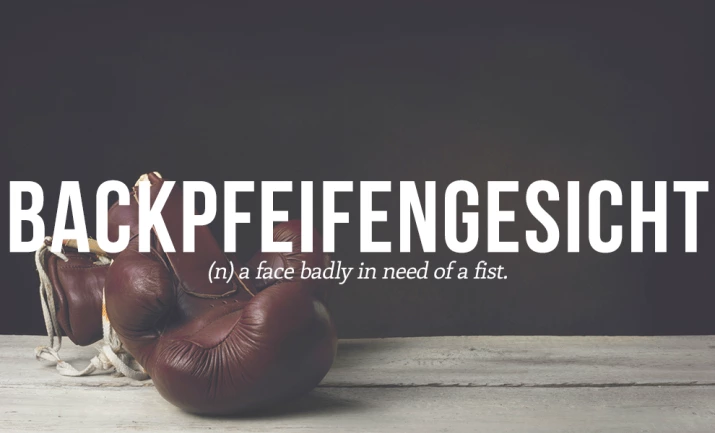
The German Language, distilled
DUNGEONS & DRAGONS
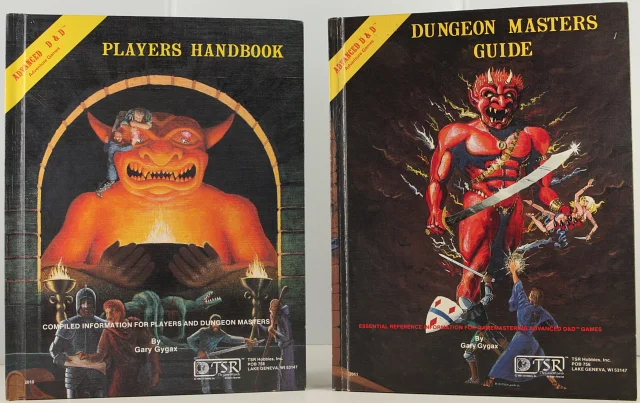
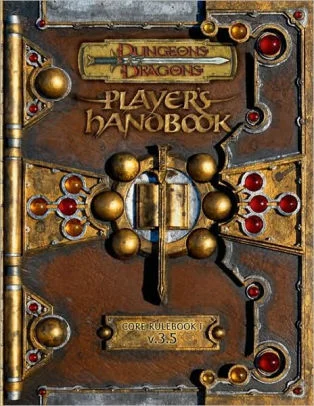
After a painful six year hiatus, I'm finally playing Dungeons & Dragons again. Last time I played was senior year of college, I DM'd two games simultaneously - one group with 8 players, another with 5. It was ambitious to say the least and a total blast, albeit very tiring.
These days, I'm waiting for a potential job on a new show to come together at the end of the month (hopefully, fingers crossed that it gets greenlit) and just writing as much as I can in the meantime. That means writing these posts, writing video essays for Skybound, working on a series document & pitch for a digital company, and of course trying to write more TV, features, and fiction all the time. And, now, finally D&D too.
I'm leading a group of close friends, 7 players total, and man is it fun. But it's also sort of surprising to see how I create an adventure and storyline now that I've evolved as a writer. It's way more world building and subplots than I remember ever doing growing up or even in in college. The mechanics of 5th Edition feel pretty different, so that's just a natural change (pretty well constructed game play, I'd say. Nicely done, Wizards of the Coast). I'm remember how to act, inhabiting the roles of every single character they encounter, which are fun muscles to get back. But more importantly, it feels like I had forgotten the number one most important skill as a dungeon master -- improvisation. It's all well and good to write down every little detail in advance, but you sure as hell can't remember it all when the times comes and you can't inundate them with every morsel of information too. There'll be no story, you lose momentum and interest. Better instead to know the world for your own sake and see where the spirit of the players takes you. And the amazing thing about D&D is you don't just know your audience, you're directly feeding off them for your own creative process.
For example, my players freed some refugees tied to a tree by bandits who posed as soldiers. The refugees led them back to their encampment which was a rag tag group of peasants who had been stripped from their homes. At the encampment, my players spent a very long time gathering information -- tapping into all sorts of potential plotlines. A refugee leader who wants their help leading a caravan to a supposedly safe land. A sketchy smuggler who wants to steal from the refugees and bring it to a nearby city. Mysterious Dwarves who have magical items. In the end, after lots of talking and bartering, and my feeling that the players were losing steam, something amazing happened. They freaked out the Dwarves, pressed them too hard, and instigated a little defensive spellcasting on the Dwarves part. Things continued to escalate as they tied the Dwarves up, deciding to search their goods. That was all I need, the chance for stakes, for things to really get out of hand. I had the smuggler try to get involved, make a buck off the thievery of the Dwarves, and then things escalated again, naturally. The players ended up attacking him, and he raised the alarm - trying to rat on them. One of the players (my wife, who is awesome) cast a crazy spell that made it sound like a booming voice was shouting in Infernal (devil-speak) from above. From my storyteller's P.O.V., the fuel had just been lit. The refugees lost it, thinking they were under attack and feeling P.T.S.D from their previous marauding experiences. Chaos ensued, and the characters all reacted in their own ways - whether it was taking advantage or getting into trouble or protecting themselves. All the backstory, the details, the plotlines, well they weren't exactly buried under an avalanche of action but they were no longer important. A new flavor had been introduced and it was all the sweeter because of its disregard of expectation. The expectation to pick a pre-set path, or even act in a certain way.
And that's a lesson I'm really going to try to remember for all my writing. Obviously the process and experience isn't the same, sitting down and writing a book in isolation or something, but you can still transport yourself into the reader's eye as you go. You can remember what draws a person into a story -- what surprises them, and use that instead of sticking to only what you enjoy creating, like the details or mythology or backstory... Destruction of expectations is always thrilling.
The final lesson is just that... the more you do something the better you get. D&D is writing, it's story creation. The more I do it the better I feel creating other worlds in other formats, even if the challenges are different.
Also, I will say that D&D presents an interesting challenge in regards to "character arcs" -- you don't really need to focus on that at all, it's up to the characters. But to try to catalyze them to change, to offer environments or cues or clues that might spur or trick them into transforming themselves and the way they act in the game... that's a beautiful challenge in and of itself.

The Handsome Family - Beautiful Stories

Ever since True Detective season 1, which used Far From Any Road as their intro theme song, I've been a big fan of the Handsome Family band. Of course they've been around for a long time before that, but I had no idea they existed - just like Alabama 3 until their Sopranos theme song wide-debut. Anyways, Handsome Family's music has been described as alternative country. I've heard them called "Hank Williams meets Edgar Allen Poe." They're a duo, married couple Brett & Rennie Sparks.
Their style is haunting and beautiful and sometimes rousing music, always with a folksy country backbone, but above all I absolutely love their lyrics. I tend to listen to music with a writer's ear, getting joy from the literal poetry of the song again and again no matter how many times I've heard it. Even if I've memorized it, the performance and emotional acting of the singer re-tunes me to it again and again.
With Handsome Family, they not only create lyrical poetry but damned good stories with a crazy thematic power to them. Here's three songs that continue to blow me away in this regard:
In Weightless Again the metaphor of the "Indians" who "forgot how to start a fire" travels throughout the narrative, just as the narrator describes himself (or herself) and his partner traveling throughout the forests of California. The chorus subtly implies the narrator contemplating suicide over the loss of the romantic feelings with his partner. It's never overt, always wistful and freely associated. Just beautifully constructed as a piece of poetic flash fiction.
So Much Wine feels more classically structured like a country song, but again employs powerfully simple similes (the dying meteors, the sad shining eyes). Someone wouldn't normally look at a shooting star and think, "there goes something dying in the sky" -- but this narrator's life is so wrecked by the person they love constantly self-destructing, that they're projecting -- a beautiful thing is now beautiful because of it's self-destruction. And then, to remember the person's eyes - the key to the soul, as if they were burning the life of their eyes out. So compact and effective. And the chorus... amazing.
Drunk By Noon is one of my favorites. Every line feels like it could be the title of a short story. See the chorus:
And if my life was as long as the moon's
I'd still be jealous of the sun
And if my life lasted only one day
I'd still be drunk by noon
The song seems to be about this person, painfully frozen in place, terrified and excited for death and wholly aware of it all the time. At once comforted by their nihilism while also being fixated on it. And they infuse it with this rollicking country rhythm, almost like they're darkly laughing the whole way through. Brilliant and honestly terrifying.
I might say it's less Hank Williams - Edgar Allen Poe, more Johnny Cash - Denis Johnson. The Handsome Family doesn't mess around!

Advise and Consent
Just saw my first Otto Preminger film, and my god it blew me away. It was Advise and Consent adapted by Wendell Mayes from the 1959 novel by Allen Drury. Like most Preminger films, it boasts an unbelievable ensemble cast. Was Charles Laughton's last role before he passed away. It's probably the only film I've seen that felt like three different films, in a row, in the best possible sense. Too many thoughts on it to write it out here, without delving into a half-baked essay, but some highlights:
- incredibly progressive, (and at the time, I imagine, transgressive) featuring a subplot that becomes a central plot -- that was bold and powerful well ahead of its time (from what I can tell this was either negatively discussed or glossed over altogether by the critics at the time)
- Charles Laughton is truly unbelievable to watch, everything Frank Underwood wishes he could be
- Preminger offered both Martin Luther King Jr. and Richard Nixon roles in the film. MLK wanted to join but feared it'd distract from his civil rights causes. Nixon was his essential crotchety self and refused on the basis that it wasn't realistic enough.
- Probably the only film that depicts jingoistic patriotism in a humanized light, not championing the perspective (in Laughton's character) but allowing you to see how it comes about, how it might be forgiven at least - after you neuter it.
- Pure master class experience on how to adapt a novel to a screenplay, also how to control space and environment in your framing... among so much else.


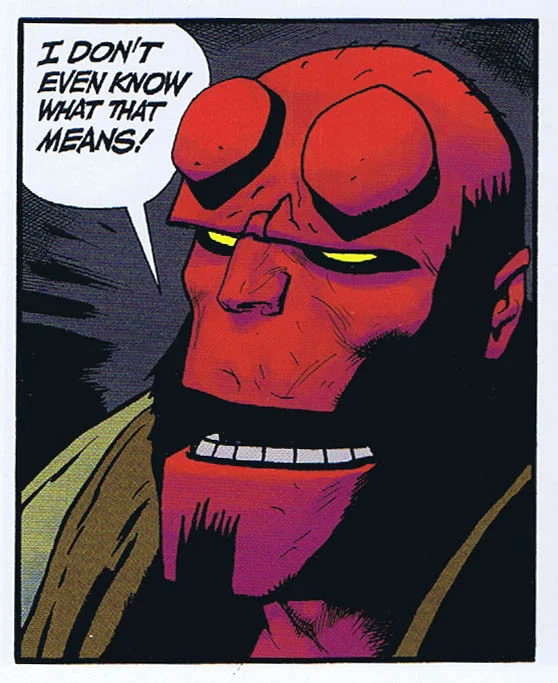
Alan Moore on Mignola & Hellboy
A beautiful quote of praise and also about nostalgia that I wanted to remember here:
"This, perhaps, is Hellboy’s greatest and least-obvious accomplishment: the trick, the skill entailed in this delightful necromantic conjuring of things gone by is not, as might be thought, in crafting work as good as the work that inspired it really was, but in the more demanding task of crafting work as good as everyone remembers the original being…. It’s not enough to merely reproduce the past. Instead we have to blend it artfully with how we see things now and with our visions for the future if we are to mix a brew as rich, transporting, and bewitching as the potions we remember from the vanished years”

Writer Influences (2018)
Just trying to do a bit of record keeping, for archaeological purposes. The writers who I'm reading / are affecting me right now:
Jonathan Ames - Wake Up, Sir!, You Were Never Really Here, I Pass Like the Night, and I Love Your More Than You Know (Essays)
Mike Mignola - Hellboy, Lord Baltimore, B.P.R.D.
David Foster Wallace - Consider the Lobster (Essays/Articles), Infinite Jest (only the first 100 pages so far though they might as well be 400)
Thomas Pynchon - Inherent Vice, Bleeding Edge, The Crying of Lot 49
P.G. Wodehouse - Stiff Upper Lip, Jeeves!
Mohsin Hamid - Exit West
Denis Johnson - Train Dreams, The Largesse of the Sea Maiden, Nobody Move (from earlier: Laughing Monsters, Tree of Smoke, Jesus' Son)
Laird Barron - The Beautiful Thing That Awaits Us All, The Croning, Blood Standard
Adrian McKinty - Dead I May Well Be
Kazuo Ishiguro - The Buried Giant (from earlier: Remains of the Day)
There are several more I'm forgetting right now... will update later.