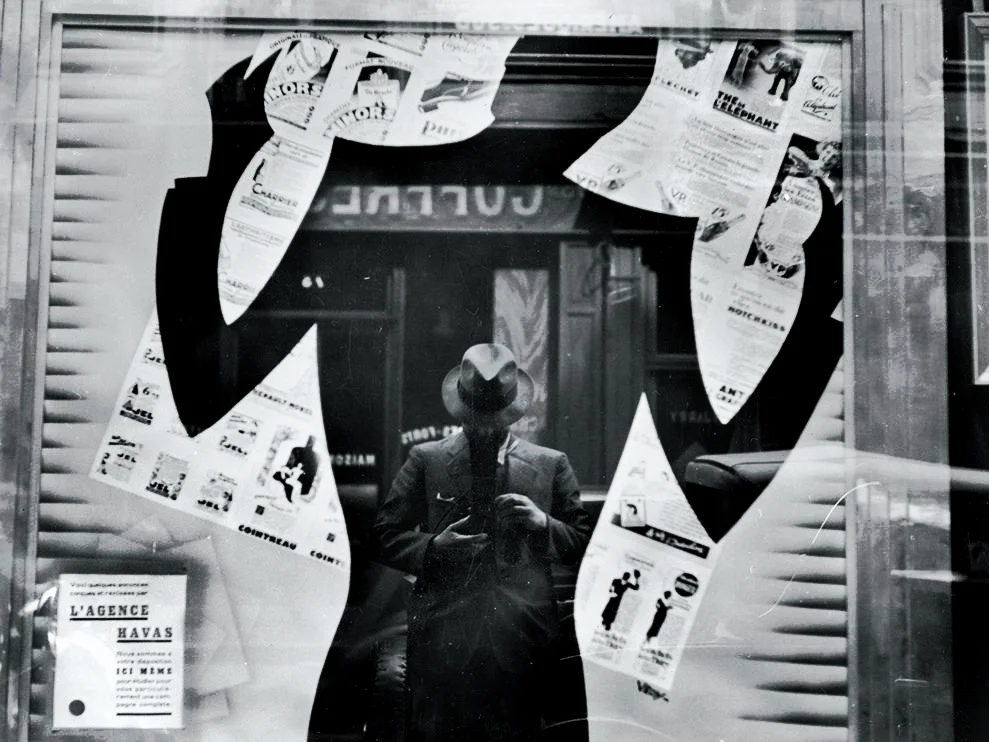
Deborah Eisenberg

Just wanted to share an interesting interview with a prolific short story writer I had never read / heard of. Loved the excerpt lines from her stories and her quotations on the mysterious nature of one’s own writing.

LINK

“For months or years on end, you’re just a total dray horse, and then you finally finish something, and the next day you look at it and you think, How did that get there?”

East of Eden

(still working on that Lone Wolf & Cub essay - so this one will be relatively short too. It’s funny how something (LWC) you’ve loved so intensely for so long, you’ve thought about and re-read, becomes that much harder to work on once the time comes. Sometimes a personal passion gets in the way of good writing. Hopefully it’ll come out the stronger for it, eventually when I’m done!)

But anyways…. East of Eden

My friend, one of the truest cinephiles I’ve ever met, hosts a weekly film screening at his apartment — wherein he chooses classics across the spectrum from Filmstruck (highly recommend). He’s screened things like Johnnie To’ MISSION to Y TU MAMA TAMBIEN and, as I previously posted, ADVISE AND CONSENT.

This week was EAST OF EDEN by Elia Kazan, adapted from the Steinbeck novel. This was James Dean’s first real role — coming on the heels of bit work and minor TV roles. He was amazing, though I was more taken with Julie Harris’ sensitive, self-aware yet raw emotional performance to be honest. Dean was fascinating to watch because of his physical discomfort, his sort of manic shyness and bursts of rage while Harris was the glue of the film, the glue that held all the characters together.

Basically, it’s the re-telling of Cain and Abel (Dean is Cain, ostensibly) in 1917 rural California around Salinas and Monterey, just before the U.S. joins the war effort. The most fascinating thing about the film to me was how conflicting the ending is — I guess I won’t get into spoilers here, but generally, the happiness imposed on the ending really does feel difficult to absorb given all that’s happened leading up to it. One brother is destroyed, self-abused and going to the war (though how good a guy he was is in of itself a difficult question to answer). The father is physically, mortally wounded and disabled. And though there is a love story that comes to fruition, it comes at the price of all this - though Abra (Julie Harris) seems to be the only one capable of redeeming the whole situation, the only one available of giving unconditional love while also understanding the gray zones of morality that Cal (Dean) inhabits. It’s a complicated, almost abrupt conclusion to a very winding and emotional tale. I think I liked it, regardless! It was my first Kazan film, and I’m a big fan — he really pulls the viewer into unique emotional moments by setting things a little off-kilter, but combining angles and unusual character movement on screen (the swing scene, the masterpiece moment). I look forward to watching more of his work - maybe ON THE WATERFRONT should be next… Anyway, it’s worth the watch!

Character Rursus P2 - Odysseus

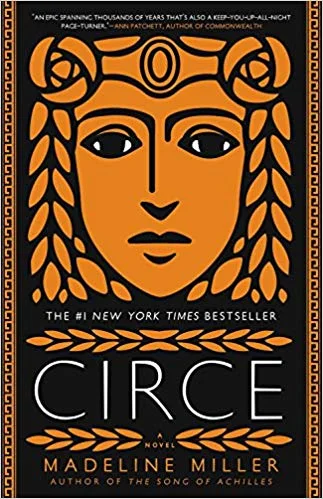
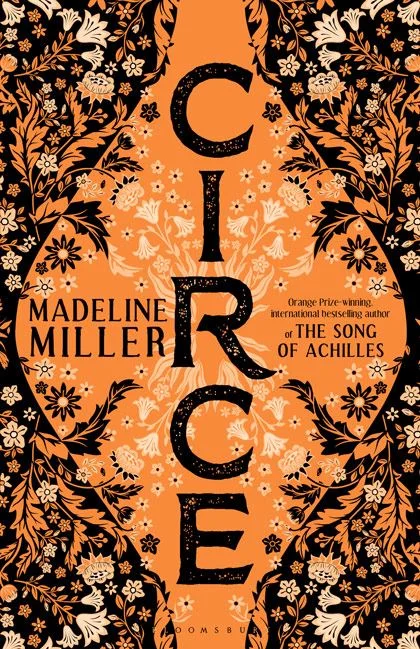
From Madeline Miller’s Circe:

“I did not see the worst of him. Even at his best he was not an easy man. But he was a friend to me in a time when I needed one.”

“It is strange to think of a goddess needing friends.”
”All creatures that are not mad need them.”

“I think he got the better bargain.”
”I did turn his men to pigs.”

… “All these gods, all these mortals who aided him. Men talk of his wiles. His true talent was in how well he could take from others.”

“There are many who would be glad for such a gift,” I said.

“I am not one.”

- - - - - - - - - - - -

I just find it fascinating how Miller chooses to methodically pick apart the myth of Odysseus as the book progresses. When you meet him, about halfway through her novel, you’re sort of awestruck and curious. He’s out for the rest of the book, after he departs, but we get all sorts of drawn out accounts of him from Telemachus and Penelope and others — things totally original to Miller’s imagination. And it’s interesting how she chooses to gradually ramp up his skewering to the point where becomes a tragic villain. To me, this is a more interesting sort of “Character Rursus” to accomplish — the successful undermining of a mythic hero. And she does it by focusing on the unglamorous and unknown segments of his life rather than flip the famous moments on their head.

How to Be Alone (short film)

I don’t have much intellectual material available for today so I’m just going to note a short film I saw last night - HOW TO BE ALONE written & directed by Kate Trefry. Hopefully it’ll make it to Sundance, or have an accessible availability down the line. Was a really cool psychological thriller — a woman battles (sort-of) physical manifestations of her repressed fears and desires. Stars Maika Monroe (IT FOLLOWS), pulling off a surprising sort of narration too. Trefry leaned into a fun and slightly trendy aesthetic - glossy 80s panoramic colors and pulsing music. It may be one of the only short films I’ve seen that understands it has absolutely zero time to waste and moves at a clip worthy of Lydia Davis…

Character Rursus

Knowing absolutely nothing about Latin, I’ve decided to butcher the language a little bit and use the word rursus (again) to cobble together a phrase: “Character Rursus.” This is when a famous character from literary history (or perhaps even just, history) is brought back in a contemporary work to be rexamined and reinvented. Rursus means “(in) return, again, on the contrary, or turned back.”

I started discussing the idea of it because I’m reading Madeline Miller’s “Circe,” which I talked about in a previous post. Miller does a deep dive into a peripheral (yet always compelling) character in Greek mythology. And while doing so, she tweaks and spins countless other famous Greek figures from Helios to Athena and Odysseus.

When discussing with my wife, we realize this strategy has become extremely trendy in books and even more so television. Once Upon A Time is a entire show built on the mechanics of Character Rursus. Older shows like Supernatural (and most long running episodic genre shows) tend to pull famous people and characters in for one episode cameos, giving their show’s spin on it. Lucifer is an obvious example too. Riverdale, to some degree. There are several others. I guess the distinction for me is that it’s not just a famous person, but a widely recognizable character that’s achieved literary status - that everyone knows the inherent traits of and such.

To me, the older the character being invoked the more interesting it is — the more you can learn. Because it tells us that there’s something resonant about that character, and so the way they change informs how we’ve changed (or would like to change) as the creator/audience.

It makes sense, why artists do this - especially for film/TV/books. There’s a draw to revisiting a character you’re already familiar with, to see how they’ve changed. And, as an audience member, it gives you a certain power-of-the-critic. You already know this character as well as anyone else, so you can be a confident arbiter of whether their re-portrayal is warranted. On top of that, when a character is successfully reinvented it’s thrilling in a different sort of way than meeting a new character altogether, who you have to work to get to know. I find this to be the case with Circe at least. Every detail I associated with her previously is kept, on some superficial level, but the deeper understanding undermines those stereotypes and allows me to root for a character I had never even considered before - but always known.