Breaking a New Episode

It’s interesting, we’re going into EP107 now and even with everything that’s behind us it feels like each episode is broken in a completely different way. It makes sense, sometimes there are just different priorities to an episode (the crossing of a threshold for a character, or a big plot movement, or making sure a new rule in introduced to the mechanics of the world). Whatever the necessary impetus, there still needs to be a wholly realized world around that episode’s milestone. So, depending on what you start with as your discussion point - whatever you’re coming out of the previous episode with, usually - that influences how you must weave the rest of the good TV components around it. It keeps things interesting, but also sort of terrifying because on some level every new episode-break you’re reinventing the wheel and relying only on what you know as an experienced writer to be true, and what you’ve established the in episodes previous.

New Movies I'm Excited About (short post)

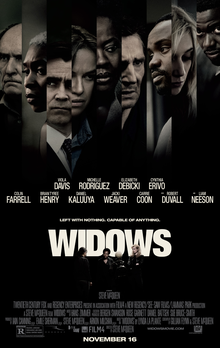
Short post today since I’m way behind on my podcast editing to-do… I'm really thrilled to see two movies this weekend: Widows - directed by Steve McQueen, and The Ballad of Buster Scruggs - the new western anthology film by the Coen Brothers. It’s been a long time, it feels like, that I’ve been earnestly pumped up to see some films just because I know the filmmakers are so good and unique. No reviews necessary, no word of mouth. Just knowing they exist is enough to get me excited. Shortly down the line, Roma by Alfonso Cuaron will fit in the same category. Sometimes I feel this way about TV shows but in this stratified, crystallizing movie-verse there’s a lot less diversity readily accessible within the film medium. So, I’ll take it where I can get it!

Writing Schedule

Made my first writing calendar for the show today (or was it yesterday?? hard to track honestly) — really blocking out and tracking exactly when the room is breaking or reviewing which episode, when an episode outline should be assigned and how long they have to review it — as well as when it should be submitted to first the production company and then the network. Really interesting and equally terrifying to understand on a granular level how easy it is to fall behind while making a show and how essential it is that you don’t. Well anyways, a new skill to add to the resume!

Long Day of Notes

After a long day of note-taking and just trying to absorb all the story being broken, like trying to drink from a fire hose, it’s interesting to think about what was absorbed (lessons for the craft, not just story volume). It’s also interesting to think how my primary job as note-taker and story-absorber/compressor is different than being a writer. Does this hinder my writing skills? Or just give me a different skillset?

Does it matter what medium?

I find myself at an interesting place in my writing career where I’m working by day in my dream medium’s environment: a drama TV show’s writers’ room - learning endless amounts about how to craft great TV (though not actually writing it myself for the show). Whereas outside the show, I have an opportunity to continue working the feature space - while actively working on various commissioned podcast projects and video essays. Not to mention, I write once a day on the blog here (and attempt to write fiction when the inspiration strikes during an open window). It’s a pretty diverse field and sometimes I wonder if I’m doing myself a disservice somehow by spreading it out like that. Would I benefit more if I trimmed all the fat and focused entirely on one medium (TV)? Or does adapting to the constraints of one medium teach you transferable lessons for another? It’s hard to say. Reading into my own proclivities, in a different part of the brain, I like to read multiple books at the same time and usually they couldn’t be more different than one another. Right now I’m reading a contemporary collection of Japanese fairy tales, a period piece adventure story, and a collection of essays about climate change and war. I tend to just pick up whichever one strikes me that day. Perhaps giving myself the ability to pivot between mediums in the same sense will produce the best work — not that I can choose so willy nilly, there are deadlines and writing schedules, but perhaps the psychology is the same for me. Something I’ll continue to think about.

Show Learning Process

As the show moves along at a high speed, I’m just trying to retain some of the torrents of knowledge I’m experiencing day in and day out. One thing I’m noting here to remember later, especially because it was similar to my previous show experience, is the general process through which the room seems to be unraveling the story:

1) Talk through the entire show, the main character arcs and rules of the world – see what organically comes out of the discussion, find the blind spots wherever they may be - lots of unintended world-building comes out of this. (more or less, Day 1)

2) Go through main characters’ episode arcs, putting down a sort of one liner description of their change/experience per episode. We did this on a big grid.

3) Start brainstorming events for the episode next to be written (not necessarily knowing which event goes where within the episode - or if it may even be between 2 consecutive episodes).

4) Turn those events into big sticky notes – color coated by plot/character grouping – start to re-order them into actual outline shape on the big board.

5) Let it sit for a day, then run through it again to make sure it all makes sense, lines up, themes coalesce, suspense is kept at a maximum - and details are added, logic issues are fixed.

6) Move on and repeat for next episode

(and once the episode is done being beated out on the board collectively, it is assigned to outline stage for a writer to work on, outside of room hours. The outline basically turns the beat sheet into a 10-15 page prose treatment where all the details are figured out, there’s a real flow and vision for the episode, and maybe even some preliminary dialogue bits (or placeholders) are written in).

On Being a Writers' Assistant

I have to say this start to my writers’ assistant gig is very different than the last. For starters, I had more than a day’s notice before starting (almost not actually, but the room didn’t end up starting until a week after I got hired which is relatively luxurious). But in terms of the room, we really dove in head first into the story with three (almost four) already existing episodes and a series bible. I discussed in the earlier post how this show is entirely original, huge world-building, etc. while the last one was a well-documented true story that unfolded over a short period of time. Anyways, the room started basically by going through the entire season, figuring out each character arc per episode, before we just dove right into breaking episode 104. At this pace we’ll be sprinting through the story, with outlines coming alongside each newly broken episode as we keep moving forward. It’s neither better nor worse than the last show, which was much slower and methodical (but also with more ready-made story yet fewer writers). As a writers’ assistant, it’s hard to know how to be most helpful to the showrunner, the writers, and generally be in unique service to the creation of the show. The last show was incredibly research/fact-checking heavy, on top of the usual notes/outlines/character document creation. I wonder if this one will be more purely organizational, creating a Silmarillion of sorts for the show - (history, rules, geographic progression even) and tracking each character’s epic arcs (some of which might end up lasting decades and decades across the show). We’ll see. I just wanted to write it out here to let it resonate a bit more. Tomorrow I’ll post a document I’ve been working on which, to me from what I’ve seen so far, breaks down the essential process of how showrunners break a story with a room and move into writing the episodes.

Reflections Early Into the Gig

It’s been a whirlwind start to the gig. We started the first day by getting three new drafts of Eps 101 - 103, I hadn’t ever read a version of 102 or 103 so there was a lot to catch up on. Speed reading and note taking until lunch, then we met in the room until evening. This show takes place in such a huge world, I love the rabbit-hole discussions that come out as a result - but at the same time its jarring, coming off a previous show that was not only based on a true story, it needed to be grounded in every detail from police procedures to timelines. That show was all about finding as much drama and surprise in between the cracks of a very well documented true story. This is the diametric opposite, it’s about restricting the big action and world-learning just enough to fit in a ton of original and surprising character arcs. I think my series documents for the show will end up being very different… To return to this thought-line shortly.