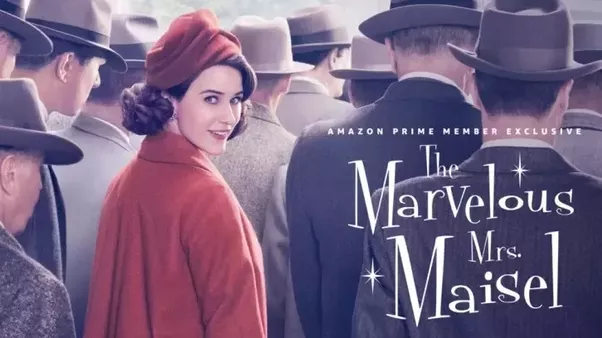
We continued watching it yesterday, after having just watched several episodes, and it was interesting - for me as a viewer, some of the enjoyment factor went down. I started to fixate on the aspects of the show I didn't like (the music choices, moments of editing -- all very subjective things) but it was the sort of bumping I never have when I watch a show over a longer period of time (1x a day sort of thing). I wonder, as current viewing trends continue, do people who binge their shows become more or less scrutinizing? Do showrunners need to adjust for this? When it's one episode a day at maximum then the plot becomes the central focus, things perhaps remain a bit more surprising, and so does this mean the standard goes down? Or is it that you shut yourself off to many aspects of the show, consciously, when you binge because they becomes like second-nature and assumed over an inundation of viewing?
Viewing Time to Audience Commitment Ratio
I recently started watching The Marvelous Mrs. Maisel (Amazon) with my wife and we did the viewing her way, which is to do about the first three episodes in a row in one sitting. To be honest, I think this is how most people watch TV nowadays. I tend to space episodes out, not more than one in a day -- it's how I best absorb it. But anyways, I was pretty much head over heels hooked by the end of the third episode. Whereas, as you'd guess, there are plenty of shows with which I watch just the pilot and decide promptly at the end of it that, well, it was interesting maybe but definitely not worth another minute.
And I realized something in this Maisel experience. It's not because I felt like I'd dedicated so much time to the show that I had to keep watching. It's not even that I needed to know what'd happen by the end of the season (an extremely reasonable 8 episodes). It's that I felt immersed and comforted by the atmosphere, style, and movement of the Maisel world. I knew what to expect and enjoy, and more so than that, I think the 3 episode immersion had conditioned me to it. The effect of the binge wasn't to hook me with twists, or even increase the magnetic pull of the actors/their characters, but to start thinking like the show. And when you get to that point, it's not work to keep watching anymore. You don't have to decode the world because you've been inoculated on a basic level. Granted, this show is less outwardly challenging to the audience than many dramas. It's incredibly comedic, and the setting is lush, and obviously it's helmed by a veteran showrunner and brilliant writer (Amy Sherman-Palladino) -- and she's not the Pizzolato type, she's not trying to reinvent the wheel and laugh in your face as you catch up. She's executing the perfection of her style of craft, with immense amounts of humor, and yet still real and subtle character drama in every scene. It's really impressive in its own right, which may be why it had the effect on me that I described. But nonetheless, I think I just felt it more strongly than other binge-worthy shows. The rules apply elsewhere. And I think three episodes is more than enough to hook someone on this multi-faceted level -- and that seems to be the norm with which people experience a new, hyped-up show.
Picking Your Projects

One issue I'm realizing will be a constant of the screenwriting profession (or any writing profession, probably) is that you have to decide between which sorts of projects to pursue -- on top of the ones you need to focus on that are paying your bills.
There are the extension types of projects. Like writing a series document for a pilot, when in theory all you need is the pilot... but it may or may not help with the pitch. Or there's the feature screenplay with renewed interest from the producer, is it worth the free rewrite if you think it'll get something real to happen? Or there's the more basic recurring question: what's the best sort of wholly new and original project for me to write? Screenplay or pilot? Or something else entirely? There's the idea itself and what medium it lends itself best to, and there's the commercial question. All of these come back to the horrible speculative bet of what you think will actually get made, get eyes on it. It's good to be fully aware of this question as you think about every potential project. But perhaps it's just the one you're most excited about, can passionately (and quickly) write the best.
My next round of digital video essays
(my first one, about Hellboy, will go up in October)
Dracula: How the Immortal Vampire Has Aged: From his inception in 1897 in Bram Stoker’s novel to over 63 film adaptations and recreations, Count Dracula is clearly here to stay. But what does this literal immortal character’s progression say about us – his adoring fans? Are we becoming more bloodthirsty, or less? Do our vampire ideals reflect the shallowness of our society – or show we’re looking for something deeper?
Lone Wolf & Cub: the Recreation of an Era: Kazuo Koike & Goseki Kojima’s magnum opus has reached an international audience, affected countless writers & filmmakers, and spawned a manga genre unto itself. This essay seeks to break down how the creators, both through literary devices and visual techniques, recreated an entire historical time period: the Tokugawa era of Japan, with breathtaking detail. From the clans and ninjas to codes of bushido, the essay will discuss how the historical details become essential and thrilling elements of the character’s story.
Age of the Retired Badass: Bruce Willis. Liam Neeson. Denzel Washington. These are some of the frontrunners of the old-guy-bad-ass pantheon. Tom Cruise & Keanu Reeves are fast-approaching on their heels. Compare their filmography and screen-presence to new action heroes – where are they? And the few that exist – do they even compete? Are we losing new action talent to the comic book franchises? And if so, where does that leave us with the retirees? This essay will examine the unlikely rise of the Retired Badass.
What can writers learn from movie trailers?
Movie trailers have always been a real pleasure of mine, I watch them all the time to reset my brain between writing sessions. And then there's that old fashioned excitement that comes from seeing the big, neon-ish green "Preview" page in the movie theater. Lately, I've become really fascinated with the idea of trailer editing - and how a longer story can be compressed into a short story with an enticement and suspense all its own. Personally, I think it requires an incredible skillset and vision for an editor that's probably rare among editors. I have one friend who's a trailer editor and I'll have to ask him his philosophy for his cuts and follow up to this post with his knowledge.
But in the meantime, I just wanted to post two recent trailers:
It's interesting, given the films themselves I'd guess I'd be more drawn to BAD TIMES just with my own personal preferences - FRONT RUNNER seems like pretty dry subject matter. And yet, I found the structure of the FRONT RUNNER much more compelling. It paints a steady portrait of Gary Hart, then introduces the idea of scandal, then still somehow retain empathy for Hart while making us question his inner self. Then, following some great classic music, it spirals out of control -- a sense of existential excitement - how bad can things get?
Meanwhile BAD TIMES AT THE EL ROYALE should be chock-full of actual action and excitement and yet I feel like the opening half wastes a lot of time telling us that there will be 7 vague character-caricatures at a motel where everyone's up to no good. It doesn't feel as compelling as it should, and its style points aren't worth anything without a concrete plot or character dynamics.
I'm not sure what the translatable lessons are for screenwriters, but certainly it pays to write real trailer moments into the project. The more telling and layered a moment can be in the script, the richer a single blip of the project will be in completion.
Meandering Thought: Notes
One skill it's taken me a long time to recognize as essential (and just plain existent) in the entertainment industry, is the careful dance of respectfully fielding notes. It's not just that you need to address them. Sometimes you specifically need to not address them, in order to maintain the quality of your work -- but you need to make them feel like it's been addressed, like wizardry it feels like. Unless you're trying to make a statement about your voice or your intent. Some combination of these notes-responses has come up every time I've worked on a development project with execs or producers.
"Why is Die Hard So Good?" Essay
Here's the opening segment from my video essay text on Die Hard -- hopefully will be produced and available online soon, will be sure to share...
"Thirty years ago, a movie came out starring a comedic TV actor and an unknown British thespian. Ebert gave the film two stars, apparently a dumb police chief undermined the whole thing... Just another summer flick following a long line of action films that’d been churned out since the early 80s.
Regardless, it started pulling in money – and wouldn’t stop. It’d go on to make $140,000,000 on a $28,000,000 budget. It’d spawn four sequels, launch Bruce Willis to superstardom, and become the new gold standard for action films. One might say it’s the movie that just wouldn’t die.
We’re talking about Die Hard here, and on its 30th anniversary we’re going to look at how it became the greatest action film ever made. “Welcome to the party, pal!”
So, why is Die Hard the G.O.A.T.? Simple: A Midsummer Night’s Dream and French New Wave cinema! Okay, maybe not so simple. We’ll get there."

Handwriting
Ernest Hemingway, in some of his letters, has said that he preferred to write different sorts of scenes in physically different ways. Specifically, that he'd hand-write descriptions of scenery and setting. He wanted his visuals to be flowing and purposeful -- it took longer to write and hand-writing it would allow for a sort of intentional flow to take shape. Meanwhile, he liked to write dialogue on a typewriter since he felt the movement of it more accurately mimicked how people talk (or, how he wanted his characters to talk) - quick, staccato, fast-as-can-be.
I wonder about this strategy and if there are ways to apply it to my writing, whether fiction or if it applies to TV. I think film and TV writing is a bit too mercenary a field to allow for this sort of time-consuming experimentation (not to mention, the scene-description cannot be flowing but demands to be as tight as possible). But it would be a great experiment to try in an updated respect. Will have to brainstorm how that'd work...
Meandering Thought: Forces Writers Digest
Generally, I think it's worthwhile to consider how writers digest the societal and environmental changes of their life, in terms of their process. Because what comes out on the other end tends to be persuasive (especially if lots of good writers are telling similar, powerful stories) and thus affect the next stage of society, right? In my case I'm interested in climate change.

"Born into this -- into these carefully mad wars -- into bars where people no longer speak to each other -- into hospitals that are so expensive its cheaper to die -- born into this -- walking and living through this -- made crazy and sick by this -- made violent -- made inhuman -- money will be useless -- explosions will continually shake the earth"
(sections taken from Bukowski's Dionsauria, We -- a terrifyingly apt description of an America today and an apocalyptic vision of America 50 years from now, pending climate change effects)
Personally, I feel that massive change on earth and in our geopolitical landscape is inevitable within my lifetime. It's why I read guys like Roy Scranton and survivalist notebooks to at once ease my anxiety and increase it tenfold. Personally, I try to grapple with feelings of guilt and helplessness while also trying to adopt a ruthless realpolitik (while still staying optimistic) about what I'll do when things really turn south. But more importantly, I can't be the only writer who feels like this in some regard. So I wonder, how is an entire generation of writers who are potentially petrified with a helpless anxiety in the face of climate change writing? Will our stories change anything or just be a time capsule? It's difficult to even self-analyze my own writing let alone others, but I am confident there will be shared resonancies and themes to be found in the years to come.
Circadian Writing Rhythms
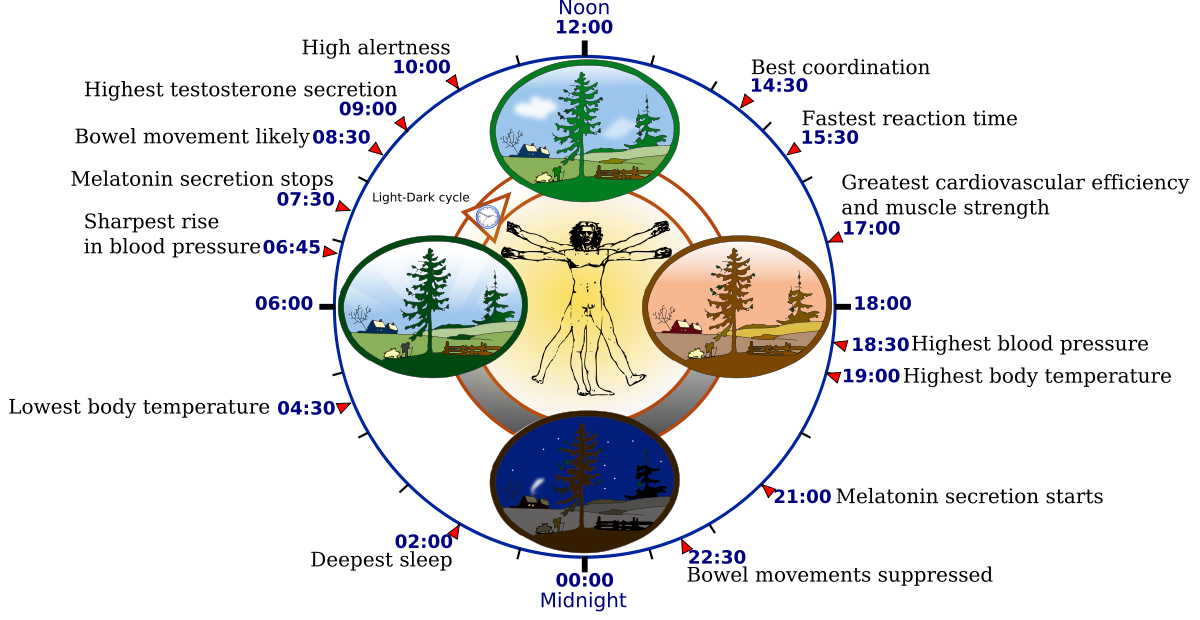
It's funny how much people try to assign tasks to certain times of day based on what they think they should be doing then, rather than what's most naturally fitting. A lot of people assert that the best time for writing is the early morning. I have yet to figure out if that's really true or if it's just the only time of day when in theory you won't be distracted from the rest of the world.
When I was working my first job out of college at FilmNation Entertainment (2013-2015), I was working from 8AM - 9PM most days and attempting to exercise to stay sane before work. But eventually I decided I needed to be writing every day, so for a block of about 4-5 months I forced myself to write from 4AM-6:30AM at least every other day. And you know what? It actually worked pretty well. I was drinking more coffee than should be humanly possible, but I also wrote my first pilot pretty quickly - all things considered. Nowadays, I struggle to get up at 6AM and really get to work writing productively before 8AM. Is it just because I'm older? Or because I don't have the immense pressure of that day job driving me anymore? Or are my circadian rhythms changing? I fear that this trend will continue to slide until I'm only writing well late at night, and destroying my sleep from the other side of the coin.
All this makes me wonder, if writing rhythms aren't related to anything biologically speaking but instead draw on some sort of self-tricked Pavlovian stimulus. For me, back in NY, it was the thrill of being up during the dark of the early morning and knowing this was my one true window to get anything done (that I enjoyed doing). There was a bit of a sick thrill to it, probably a little masochistic too. I imagine it's the same for writers who can only write late at night -- the idea that you're throwing responsibility to the wind all for the sake of your craft, you're doing something no one else is... The followup question is: if the same writer were to only write during these strange times vs. a copy of him to only write like a normal human being during the day's work hours - would the products be completely different?