Advice from the Showrunner

Well, it’s not advice exactly but it’s an interesting process/method that our showrunner talked about in the room yesterday.

He said that when he runs into a writers block, or specifically a problem with the story that he’s having trouble fixing, he takes a break from sitting at the computer and watches something. Specifically, he watches a great film - or just a great scene from a film - that has absolutely nothing to do with what he’s trying to fix. He said that as he watches, and is inspired and to some degree - distracted, his mind works on the problem in the background - or just beneath the surface. He’s inspired by the scene at the same time - and perhaps the inspiration gives him a new energy because he says his mind usually figures out a solution to the problem by the time the scene is over.

I feel like I’ve tried this before instinctively, but have always been distracted by the guilt of procrastination — next time I’ll have to enter into knowing that it’s alright, it’s all part of the mystical process!

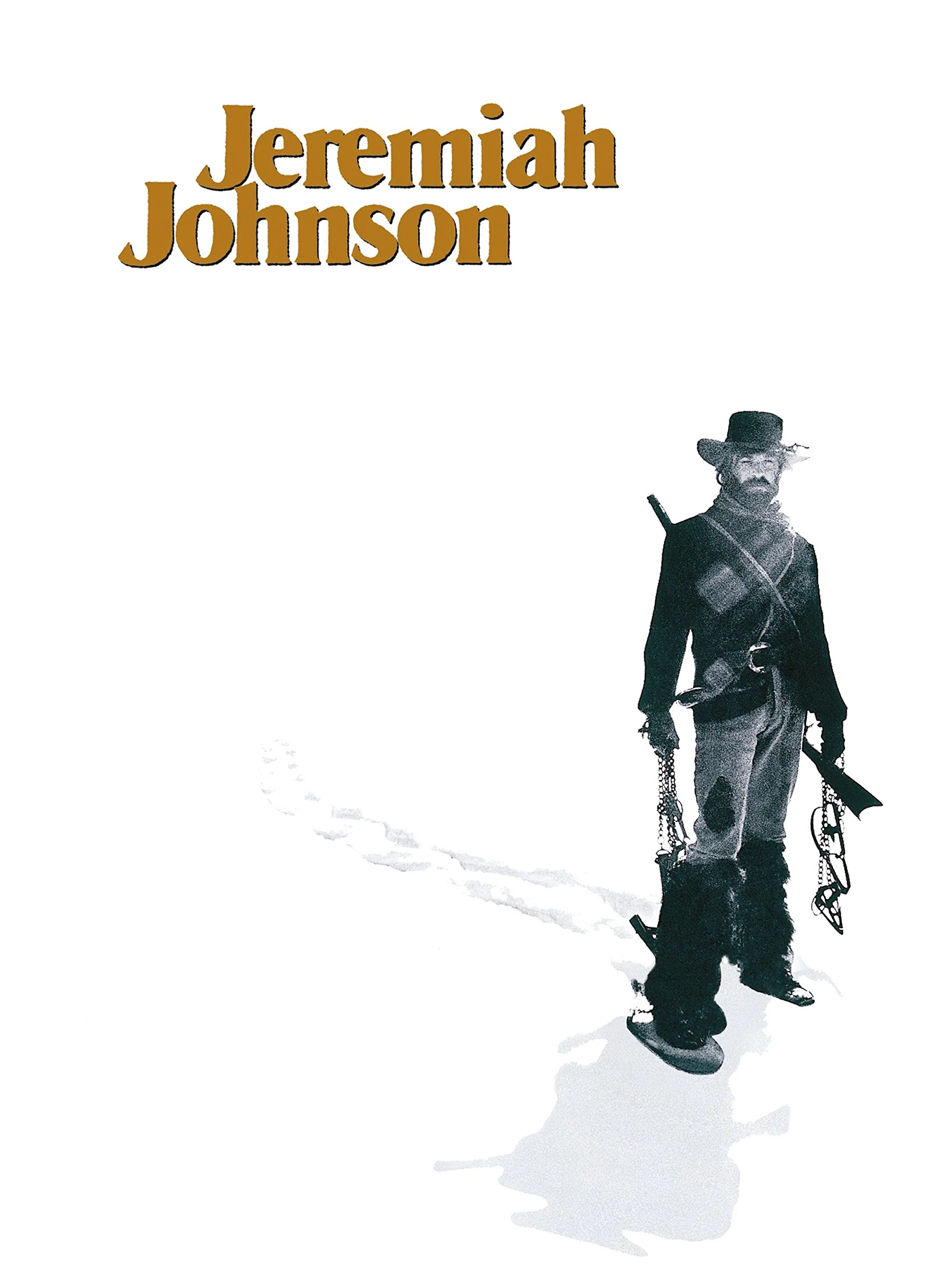
Jeremiah Johnson - story structure, follow-up

As I’m diving into my new feature that is wholly inspired by Jeremiah Johnson, I’m realizing how unusual a story structure the film has — and how difficult it’d be to make something similar today. It seems like a crazy structure to me for two reasons.

First, and most apparently, is the fact that we know nothing about Johnson’s character off the bat, nor do we ever learn anything about what came before the first frame of the film. We can infer he was in the navy, given his striped pants and mariner’s cap but beyond that - there is never a mention of his parents, his war time experiences, where he came from, nothing. All we ever receive his is staunch disappointment with civilized society and its mores. This is a bold choice that would be tempting to undermine in favor of added character depth - but instead they give us Johnson’s character a priori, for us to figure out based on only his actions in the film.

Second, the overarching character arc is fascinating. The first half, or so, feels like a Joseph Campbell - Hero’s Journey (without the familiar home context to begin with). A man ventures into a new land, meets people, has experiences, the experiences change him, and he ends up positively changed and more powerful. That would bring you about 70 minutes into the film. SPOILERS: by this point, he has a family - a cabin, he’s built his own little version of society - the thing he’s run so far from, in some sense - but made it his own. But the character arc continues. SPOILERS AGAIN: he loses everything, his family killed - he burns his house in a fit of rageful grief. And then dedicates himself to exacting vengeance. And yet, the story doesn’t continue so simply there. It’s not a tale of rageful justice. He actually feels catharsis immediately after his attack on the hunting party ends — he stops himself short, realizing violence will not comfort him. But now he’s a marked man, attacked by the Crow tribe wherever he goes. His arc is not one of vengeance, but of survival. Of being caught in the forces of nature (and fate). And here’s where things get really interesting: he methodically (by the writer’s design) ends up reuniting with each person who met on the way up to the moment he lost his family. And they’re in the same places more or less. It’s an exact retracing of his young hero’s journey - except now it’s marked by grief, isolation, and constant attacks from all sides. By the end of it, you truly feel his legendary status. Not as a hero, but as a myth incarnate. It’s an incredible effect.

And to sum up, I don’t think the second aspect would’ve worked (or landed as powerfully) without that first aspect - the lack of backstory. If we knew all sorts of contextual details, they would color his journey - distract from the myth that is being built in front of your eyes in the wilderness. What good would it do to know his parents names, or that he was married once before, or anything like that? And yet, the average audience expects that sort of thing. So, it’s all the more brave that Pollack, Redford, Milius, and Anhalt worked past it.

Last thing I’ll mention is that, if you read the early draft of Jeremiah Johnson (which I linked to below in a previous post) you’ll see that it is WAY longer than the finished product - in terms of volume of dialogue. They cut out huge swaths of it. And yet, the dialogue (and monologues) that they kept in so truly make the film and give it a colorful identity — it’s like they knew they had too much of a good thing and compressed it to the perfect serving for the audience. So impressive.

Experienced TV Writers

As I approach the end of the time in the writers room for the show I’m on, I am trying to reflect on what I’ve learned and hopefully absorbed.

One thing that’s struck me is what makes an experienced TV writer. Not a showrunner necessarily, but someone who can go from room to room and be an asset to the showrunner (a.k.a. co-executive producer, supervising producer, producer, etc.).

It’s seems to be that a good high-level TV writer is one who understands the vision of the showrunner on such a deep level (and has learned it quickly) that they can be trusted to go run with that vision (in outlines and script and later on set) and be utterly consistent with it, down to the minutia. That, plus the experience of being on set and knowing what pitfalls to avoid and what tricks to use, starting from the outline stage.

Awesome Assistants TV Event - Follow Up

Good news - the event sold out within the first 6 hours of posting! We’re looking at 150 max capacity attending, which is mind boggling to be honest.

But, if you are still interested you can email us (details in the flyer included in the previous post) and we can put you on the wait-list. We’re also exploring having an outside podcast team join the event and record it - so if that happens I’ll be sure to share the recording here.

Car-fu, Exploding Heads, The Re-Naming Death

As we head into holiday/year-end break, I’m going to extend the vacation to my daily blog post rule. Will give this old diary a rest for a bit, and see if I can focus what remaining energy I have entirely on writing some new things. Before I take my short leave, I'm going to recount three hilarious little moments from the writers’ room just to have to look back on and laugh:

1) Car-Fu — our showrunner bumped on the idea of two “landers” (like low-flying vehicles) battling in the air in any way. He casually said, “nah, that’d be too much car-fu” to which all of us were like, “huh??” He then explained that his friend, who wrote some of the Fast & Furious movies, coined the term. Once you know the context it is kind of self-explanatory — vehicles executing tricky manuevers while battling each other… Too much car-fu!

2) The showrunner recounted a funny scene from a big production meeting he had with the network and the director/EP of the first couple episodes. This director is huge, really huge is all I’ll say. And when it came to the sequence where an android will explode some dude’s head the director said - “You know, I’ve seen a lot of exploding heads in my day. We’re going to do this one differently.” And when he said it, you believed him. The man has seen some exploding heads. So, what will come across on the screen will be unlike anything you’ve seen before, I assure you.

3) Last little lesson - the showrunner is staunch believer of the notion that if you are forced to rename your project then it will die. They tried to get him to rename this show and he refused, and here it is going (he reasons) while multiple shows and films of his apparently died in development after he renamed them. Another show that he actually made, he was forced to rename it right before it started shooting and apparently that killed it for him! Must be an omen…

Alrighty, well, happy holidays!

Snark Dark

Had a long conversation in the writers’ room yesterday about different TV brands and how they’re attempting to survive by asserting a particular taste. We decided that FX does indeed have a solidified style (even if their subparent company, FOX, couldn’t be more amorphous) — and that is, snark dark. It’s dark drama stuff, but it’s winking too. As our showrunner said, you care but you don’t care - you don’t laugh, but you smirk. It’s just self-aware enough to be cool rather than earnest. Quite an interesting brand to have established, but it seems to work amidst a sea of other options that aren’t so specific.